HHS/ASPR Exercise “Tranquil Passport” Supported by MRIGlobal
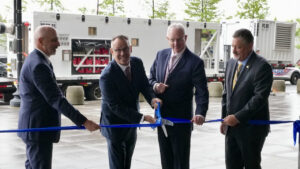
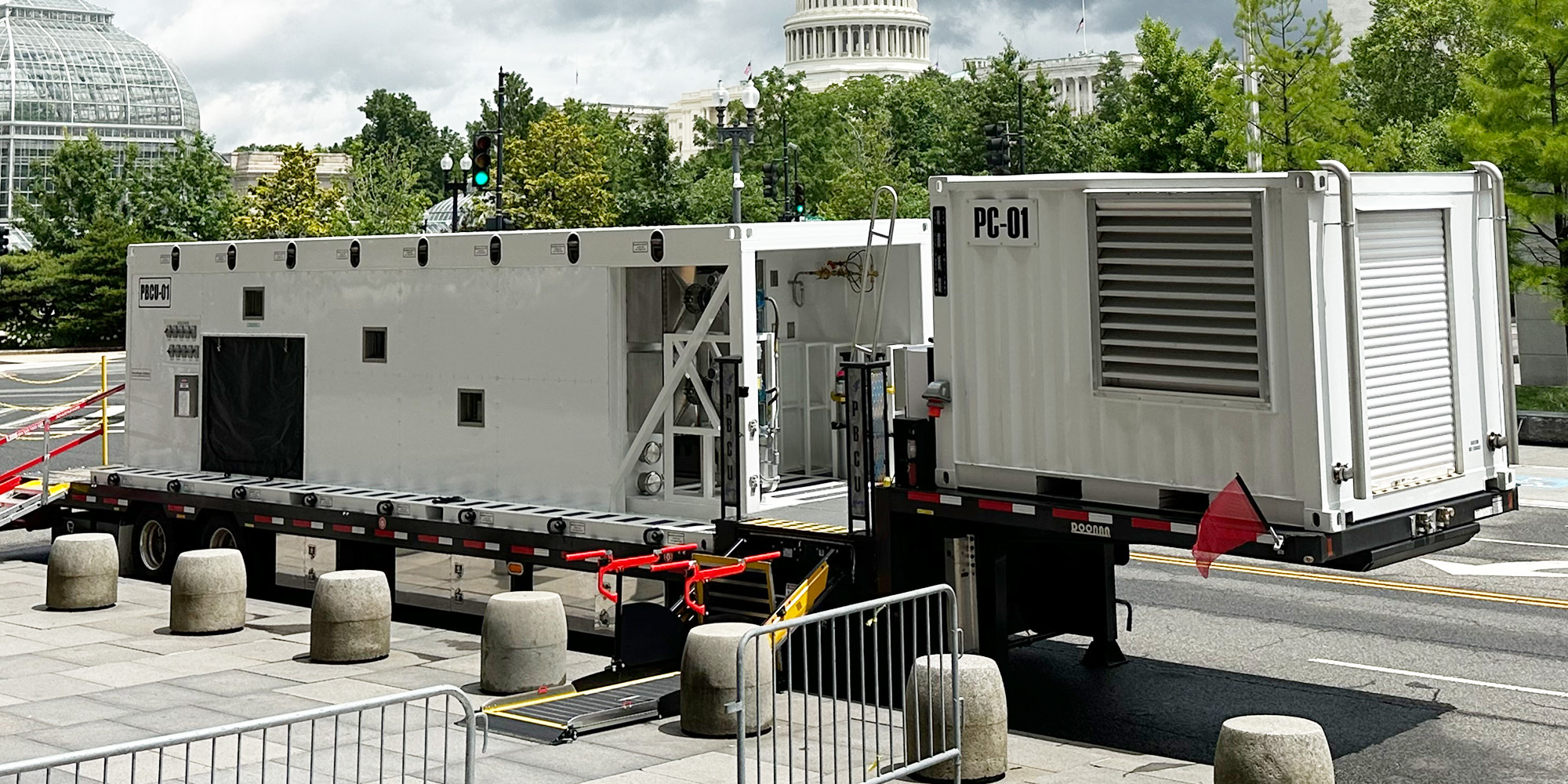
Kansas City, Mo.: (June 26, 2025) – MRIGlobal is proud to have served as prime contractor on development of two new Portable Biocontainment Units (PBCU), which were unveiled in May 2025 by the U.S. Department of Health and Human Services’ (HHS) Administration for Strategic Preparedness and Response (ASPR) during a ceremony in Washington, D.C. The PBCU is the first domestic resource for isolating and transporting patients with high-consequence infectious diseases via ground and air to specialized care facilities.
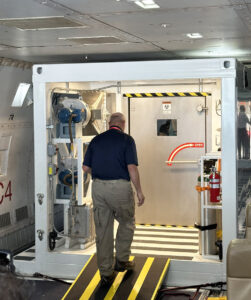
Given the immediate risks associated with possible future outbreaks, pandemics, and related bioterrorism threats, the ability to provide biocontainment in patient transport is critical. This makes the PBCU a necessary asset to the country’s ability to respond to these threats and protect global health. For the first time, the U.S. has the equipment needed to transport highly infectious disease patients safely, providing care for the patients, while protecting the medical staff and the American people.
Built upon MRIGlobal’s decades of biocontainment expertise, the PBCU allows for the isolation and biocontainment of highly pathogenic infectious disease patients and providing them medical care during transport. The interior design provides a safe environment for a full spectrum of critical care for those patients while allowing for thorough post-deployment decontamination using vaporized hydrogen peroxide. The unit also maintains containment in the event of emergency landings or mid-air rapid decompression events to ensure the safety of the medical staff and flight crew.
The week of June 23rd, MRIGlobal supported ASPR’s Tranquil Passport, a full-scale exercise to field test the PBCU in the transportation of infectious disease patients. The exercise allowed the department to test existing plans, processes, procedures, authorities, and capabilities to coordinate the movement of several patients from Canada to multiple locations within the United States. The exercise occurred over four days with coordination from local, state, federal, international, and nongovernmental partners including MRIGlobal.
“For more than a decade, the U.S. government has trusted MRIGlobal to produce mobile laboratories and flyable biocontainment units that support global health and national security. Whether asked to help evacuate Ebola doctors to receive westernized medical care or support field-forward Ebola outbreak diagnostics, MRIGlobal’s team of engineers and infectious disease experts has answered the call,” said Ian Colrain, PhD, President & CEO, MRIGlobal. “In collaboration with our primary subcontractor and partner HHI Corporation, we are proud to have led development of the PBCU and be involved in supporting the recent Tranquil Passport mission. The PBCU serves as an important asset in response to current and future infectious disease and bioterrorism threats.”
The PBCU is unique because of its ability to operate from the platform of large aircraft, including a C-130 or L-100, providing flexibility in where it can land and operate. Once on the ground, the PBCU can be loaded onto a customized trailer for ground operation and transit to a hospital. Because patients can be isolated inside the PBCU and continue to receive care, hospitals do not have to activate their biosecurity protocols.
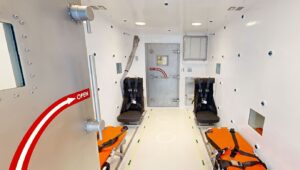
Each PBCU can safely evacuate critically ill patients while maintaining biocontainment through a system of regulated air flow, HEPA filtration between all airspaces, and cascading pressure differentials between airspaces. The system is divided into a patient room, an anteroom, and a medical staff room. The entire system is held negative to the aircraft cargo bay and all exhausted air passes through two stage HEPA filtration to protect the flight crew. Real-time pressure monitoring with audible and visible alarms verifies desired pressure differentials while an interior camera feeds interior and exterior video monitors for constant patient monitoring. All interior walls are coated with a seamless epoxy coating formulated to ensure containment while surviving the thermal, mechanical and chemical stresses introduced during loading, flight, decontamination, and emergency landing scenarios.
###
ABOUT MRIGLOBAL
For more than 80 years, MRIGlobal has improved people’s lives through scientific and engineering research, producing innovative solutions to important biological, chemical, and engineering challenges. Founded as an independent, nonprofit organization, MRIGlobal performs customized research and development services for health and defense-focused organizations. This includes expertise in clinical research support, infectious disease and biological threat agent detection, global biological engagement, in vitro diagnostics, and laboratory management and operations. Visit mriglobal.org to learn more.
CONTACT:
Mark Crouser, MRIGlobal
mcrouser@mriglobal.org
816-582-8839